Woodshop layout example · 12' × 20'
Shed Workshop Layout (12x20)
This shed workshop layout uses a 12×20 shed, about 240 square feet: long and narrow, with double doors on the short side. That is a good shape for woodworking if the table saw rips toward the doors. In this example a jobsite saw sits near the doors, the workbench behind it doubles as the outfeed table, and everything else lines the long walls. Open it in the planner and change it to fit your shed. It suits hobby woodworkers building or converting a backyard shed; for a room of similar size, compare the 12×16 wood shop layout and the small woodshop layout.
Interactive preview
Explore the plan
Zoom in to read every machine and zone. Open it in the planner to move things around.
Workflow
How this layout works
- Lumber in through the 5 ft double doors on the west wall, straight into the saw’s infeed lane. Long boards go on the lumber rack on the north wall.
- Cutting at the jobsite saw, which faces the doors. With the doors open you get as much infeed as you need for 8 ft rips.
- Outfeed and assembly on the 6 ft workbench right behind the saw, set to the same height as the saw table.
- Milling and shaping at the benchtop planer on a cart along the south wall and the 14″ bandsaw at the east end.
- Drilling and storage: the drill press on the north wall, shelving and the shop vac next to the doors.
Machine placement notes
- Table saw: about 6 ft of floor between the saw and the doors, plus the open doorway for longer rips.
- Workbench as outfeed: the bench sits directly behind the blade, so it catches the board and is your assembly table at the same time.
- Long walls: in a 12 ft wide shed, keep machines against the long walls so the middle stays free for the saw lane.
- Planer on a cart: roll it into the saw lane for long boards, then park it against the wall.
- Doors: double doors that swing out keep the inside wall free. Do not block the doorway with anything that cannot roll away.
Dust and power
Dust collection and power
A shed is too small for a big collector, so this plan uses a shop vac with a cyclone separator, parked near the doors and moved from tool to tool. For the saw, a collector on a cart is an upgrade once you add a cabinet saw or a bigger planer. Open the doors and a window for fresh air.
A workshop shed needs its own power feed from the house, usually through a subpanel; extension cords are not a permanent solution. All tools in this example run on 120V. Have an electrician plan the feed and the circuits, and think about insulation if you want to work in winter.
Your turn
Customize it for your shop
Set your shed’s real size, move the doors, and add the machines you own. If your doors are on the long side, rotate the saw so it still rips toward them. Red marks mean a machine is in another machine’s working zone; yellow is only a hint.
Keep exploring
More woodshop layouts
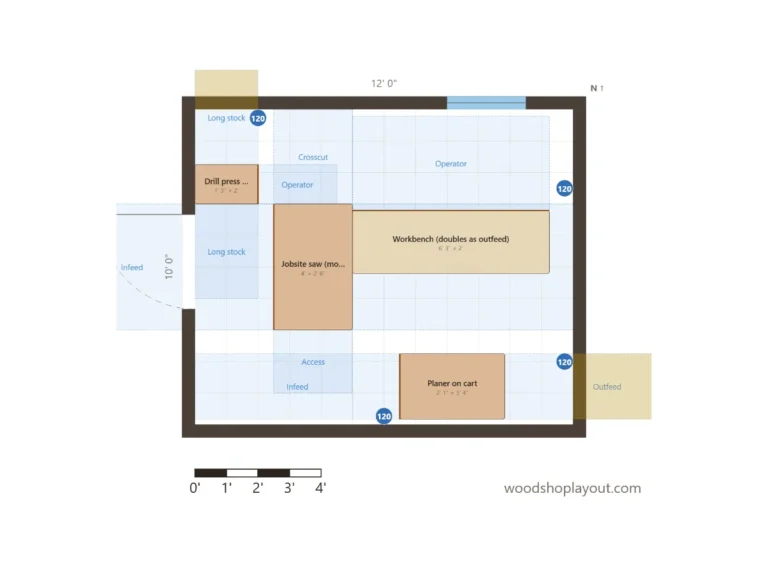
10' × 12'
Small woodshop
Jobsite saw that rips through the door, bench as outfeed, tools on carts.
View layout →
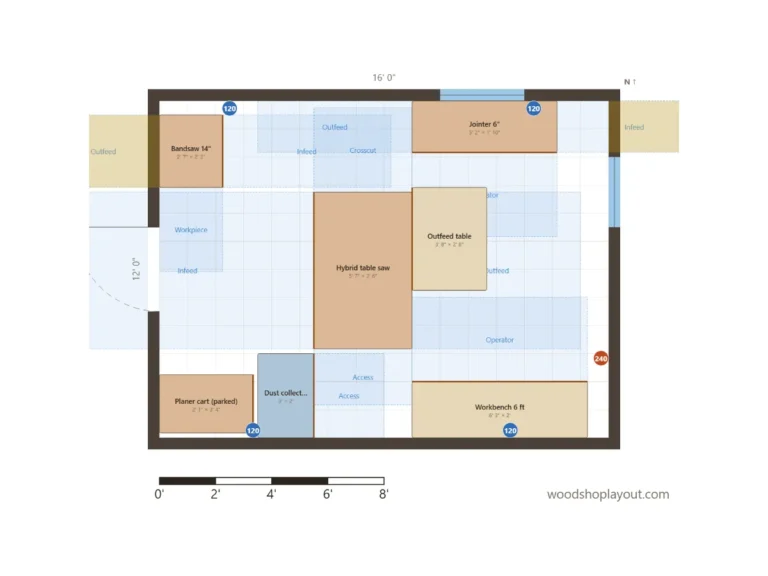
12' × 16'
12x16 wood shop
Hybrid saw in the middle, jointer on the wall, planer on a cart.
View layout →
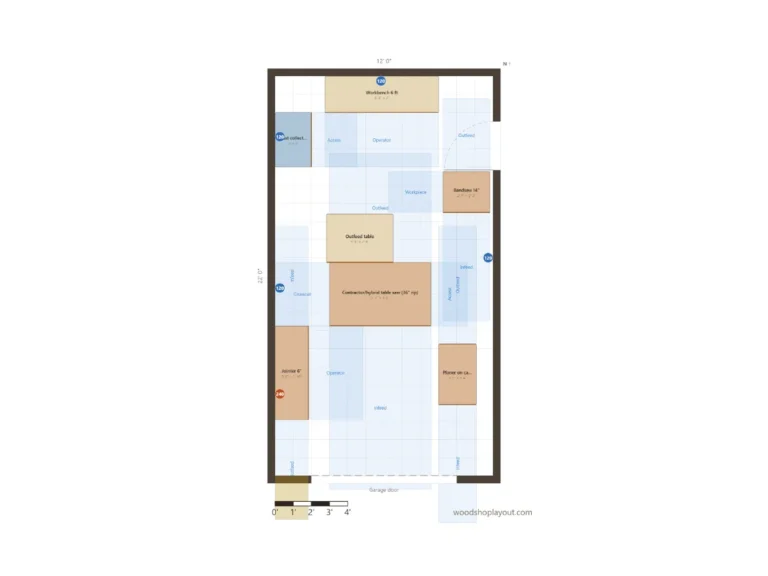
12' × 22'
1 car garage
Long and narrow: the saw feeds from the garage door.
View layout →